Key takeaways
- Go in spring or autumn and avoid Chinese public holidays — heat and crowds are the two biggest strains.
- Plan one main sight a day with a car on call; high-speed trains are smooth and big stations have lifts.
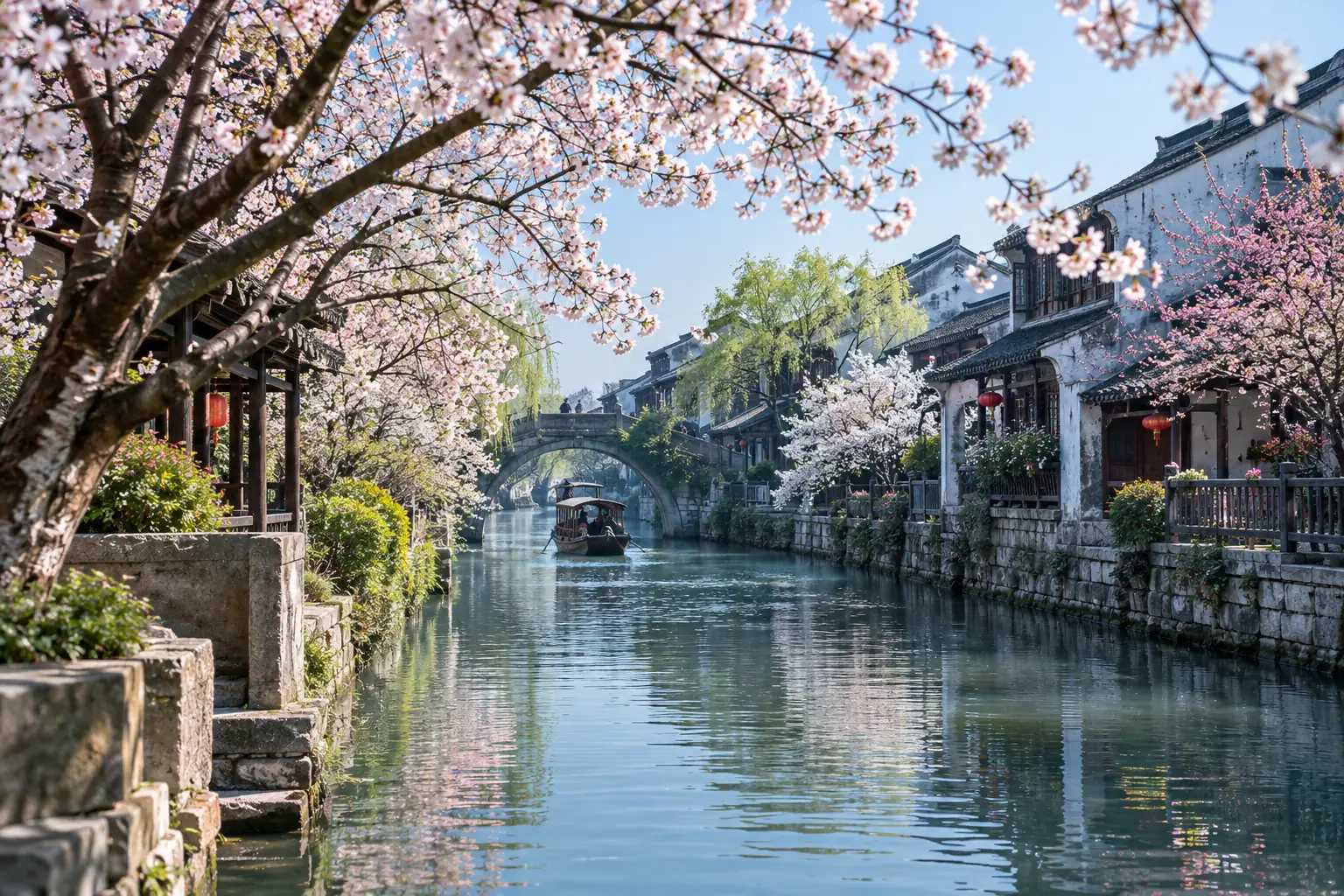
- Suzhou gardens and water towns have steps and uneven paving; West Lake and the Bund are flat.
- Bring medicines in original packaging, set up mobile payments and buy insurance that covers China.
Many of our guests are travelling with parents in their seventies, or are retirees themselves. East China is a wonderful choice — the cities are safe, the trains are smooth and the food is gentle on the stomach — but the right pace makes all the difference. Here is what we have learned.
When to go
April–May and October–November are the most comfortable months. July and August are hot and humid, which is tiring for older travellers. Avoid the May Day holiday (around 1–5 May), the National Day “Golden Week” (1–7 October) and Chinese New Year, when trains and sights are extremely crowded.
The one-main-sight-a-day rule
Plan one main visit in the morning, a long lunch and something light in the afternoon. Build in a free afternoon every two or three days. Two nights in each place is far more relaxing than one, and it is better to see fewer places properly than many in a rush.
Getting around
- High-speed trains are smooth and punctual. Large stations have lifts and escalators, but they are big — allow time and consider a porter or a guide to help with luggage. First-class or business seats give more room.
- A car with driver that waits nearby means no taxi queues and somewhere to rest between sights.
- Wheelchairs: airports and many major sights can provide them on request, but old towns and gardens are not step-free. Tell us in advance and we will plan accessible routes.
Which sights are easy, and which are not
| Sight | Walking | Steps | Our tip |
|---|---|---|---|
| The Bund, Shanghai | Flat promenade | Few | Lovely at dusk; benches along the way |
| Yu Garden, Shanghai | Moderate | Some | Go at opening time to avoid crushes |
| Suzhou gardens | Moderate | Thresholds, small bridges | Choose one garden a day; sit in the pavilions |
| Water towns | Moderate | Many bridge steps | A boat ride shows the town without the bridges |
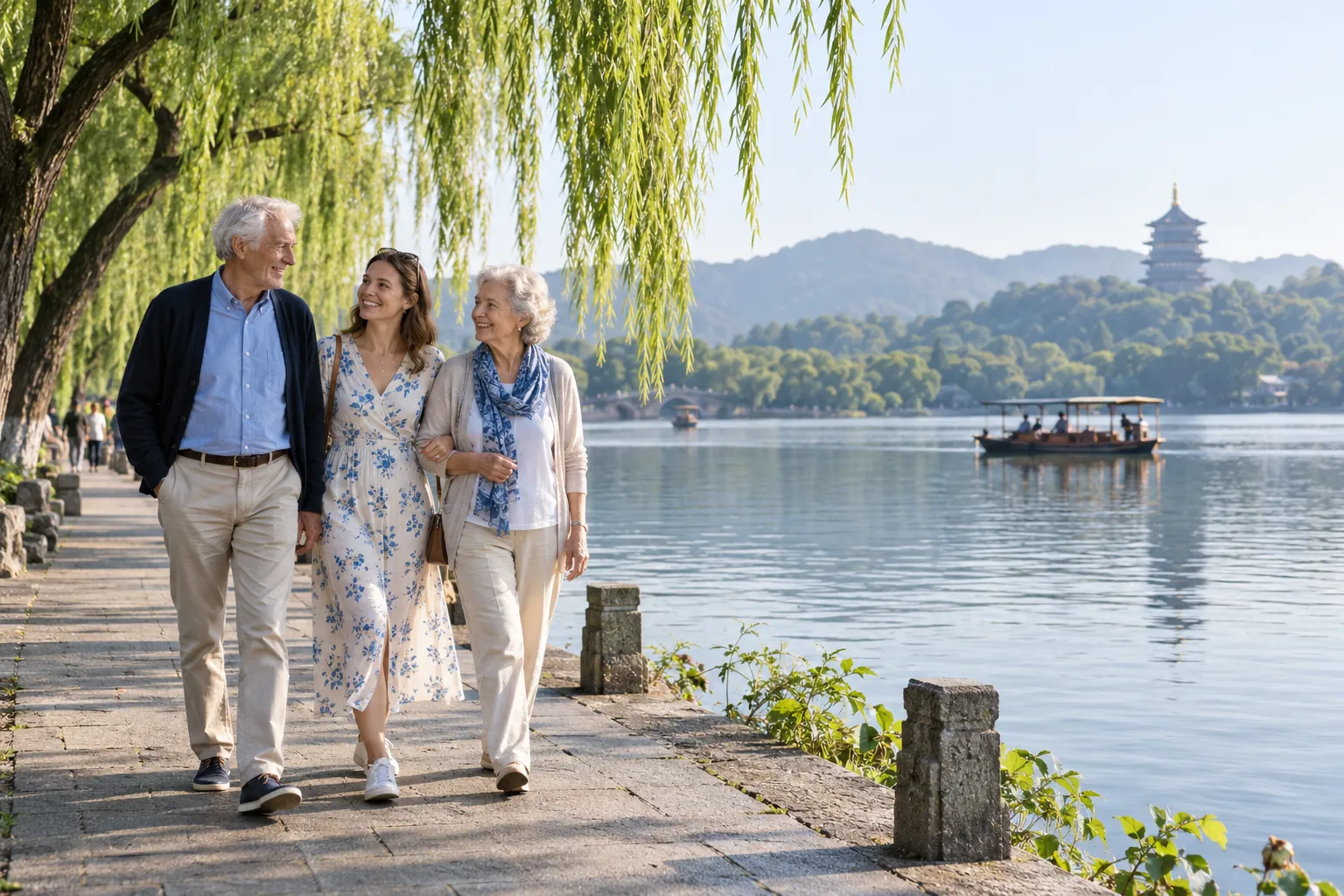
| West Lake, Hangzhou | Flat | Few | Electric shuttle carts and boats save walking |
Hotels
Choose hotels close to the sights rather than by the station, with lifts and, if needed, a walk-in shower instead of a bathtub. Ask for rooms on lower floors away from the lifts if anyone is a light sleeper. We note these preferences on every booking.
Health and medicines
- Bring enough prescription medicine for the whole trip in its original packaging, with a copy of the prescription.
- Shanghai, Hangzhou and Suzhou have international clinics and hospitals with English-speaking staff; your guide can help with appointments and translation.
- Buy travel insurance that covers medical treatment and evacuation in China, and carry the policy details.
- Food is usually mild in this region; Shanghainese and Hangzhou dishes are often slightly sweet rather than spicy.
Money and phones
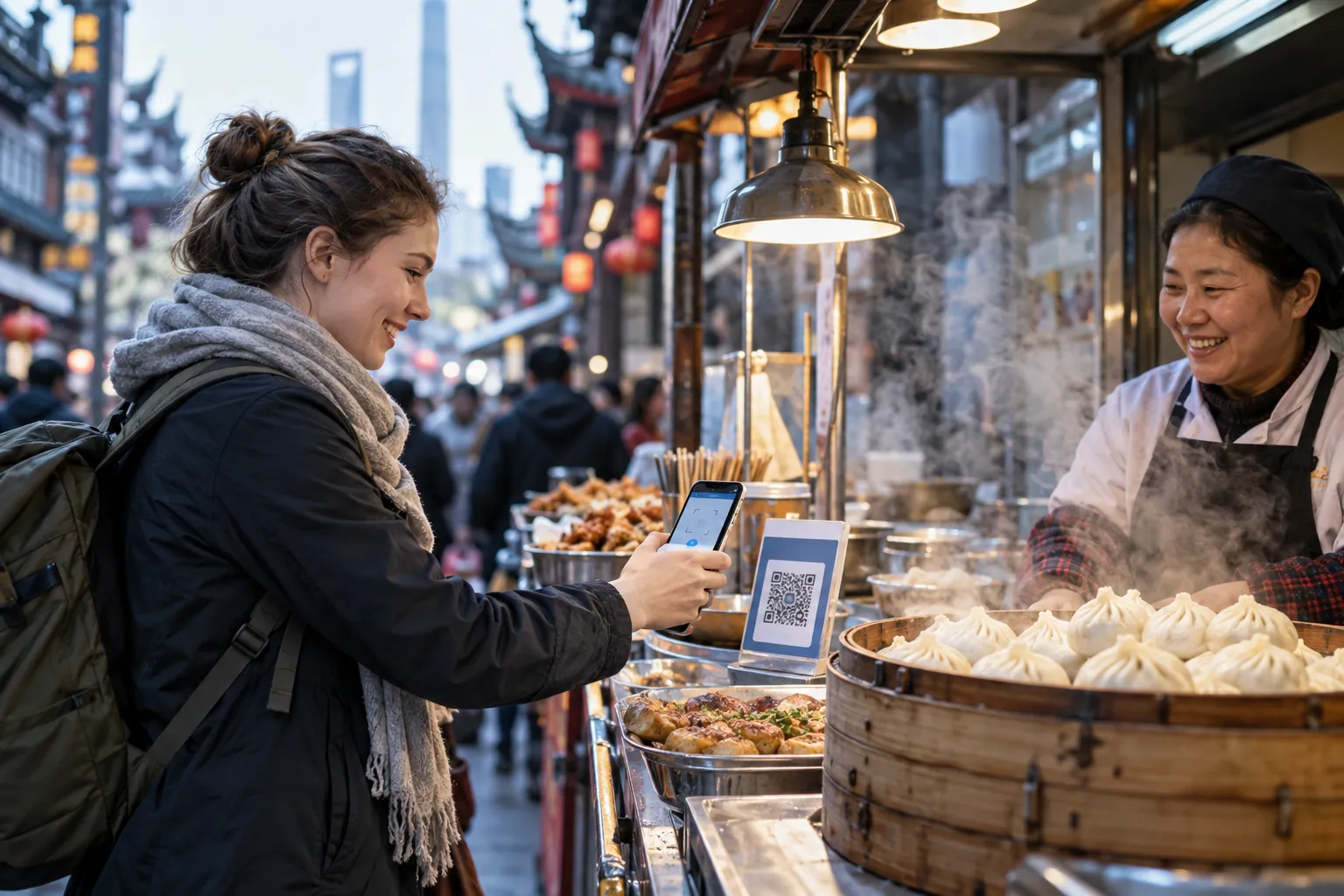
Mobile payment (Alipay or WeChat Pay) is used almost everywhere and both accept foreign bank cards. Set them up before you leave home. Cash is still legally accepted, so older travellers who prefer it can carry some yuan as a back-up. Make sure everyone has international roaming or a travel eSIM so you can reach each other and your guide.
A gentle route
Any of our tours can be slowed down. A good starting point is the Jiangnan Water Towns Slow Journey or Hangzhou Tea & West Lake — tell us about everyone’s pace and we will adapt it as a private trip.
Frequently asked questions
Is China safe for elderly travellers?
Can you arrange a wheelchair-friendly itinerary?

Written by our Shanghai-based trip planners, who have been arranging East China journeys for international travellers since 2012.